
Free Emotional-Regulation Worksheet
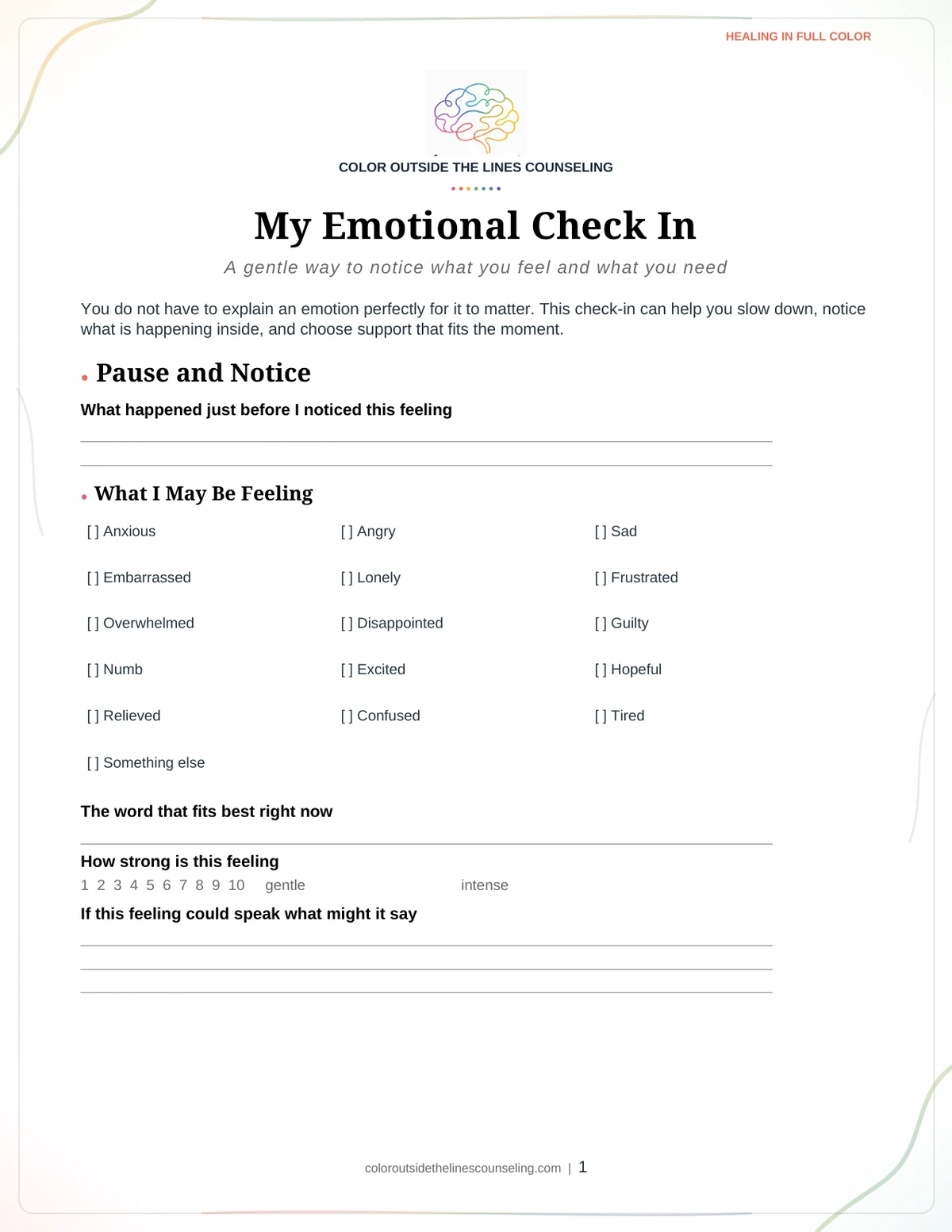
My Emotional Check-In
Make Room for What You Are Feeling
Sometimes you know that something feels wrong, but you cannot find the words for it. Other times, several feelings arrive at once and become difficult to sort through.
My Emotional Check-In helps you slow down, name what you are experiencing, notice how it is showing up in your body, and identify what you may need.
Free PDF • No email address required
This Tool May Help If…
- Your feelings seem too big or difficult to explain.
- You feel overwhelmed, shut down, or emotionally exhausted.
- You have trouble identifying what you feel.
- Your emotions appear first as physical discomfort.
- You are unsure what kind of support would help.
- You need space before responding to a situation.
What Is Inside
This worksheet will help you:
- 1Identify what happened before the feeling appeared.
- 2Explore different emotions that may be present.
- 3Rate the intensity of the feeling.
- 4Notice physical signs in your body.
- 5Look underneath the emotion.
- 6Identify a need or supportive response.
A Gentle Way to Use This Tool
There is no wrong emotion to choose, and you may notice more than one. Begin with the word that feels closest, even if it does not describe everything perfectly.
Feelings are information—not instructions, failures, or character flaws.
When Big Feelings Need More Support
Therapy can help you understand emotional patterns, communicate what you need, and build regulation skills without asking you to stop feeling deeply.
You May Also Like
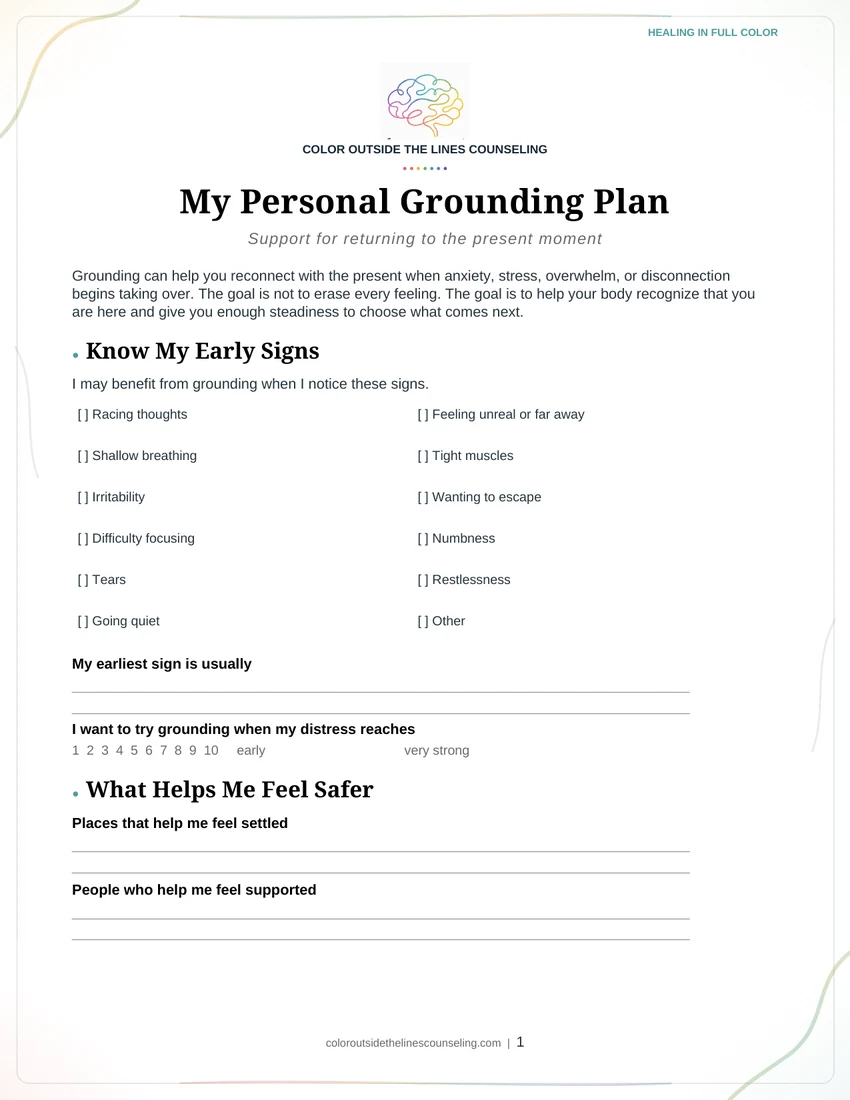
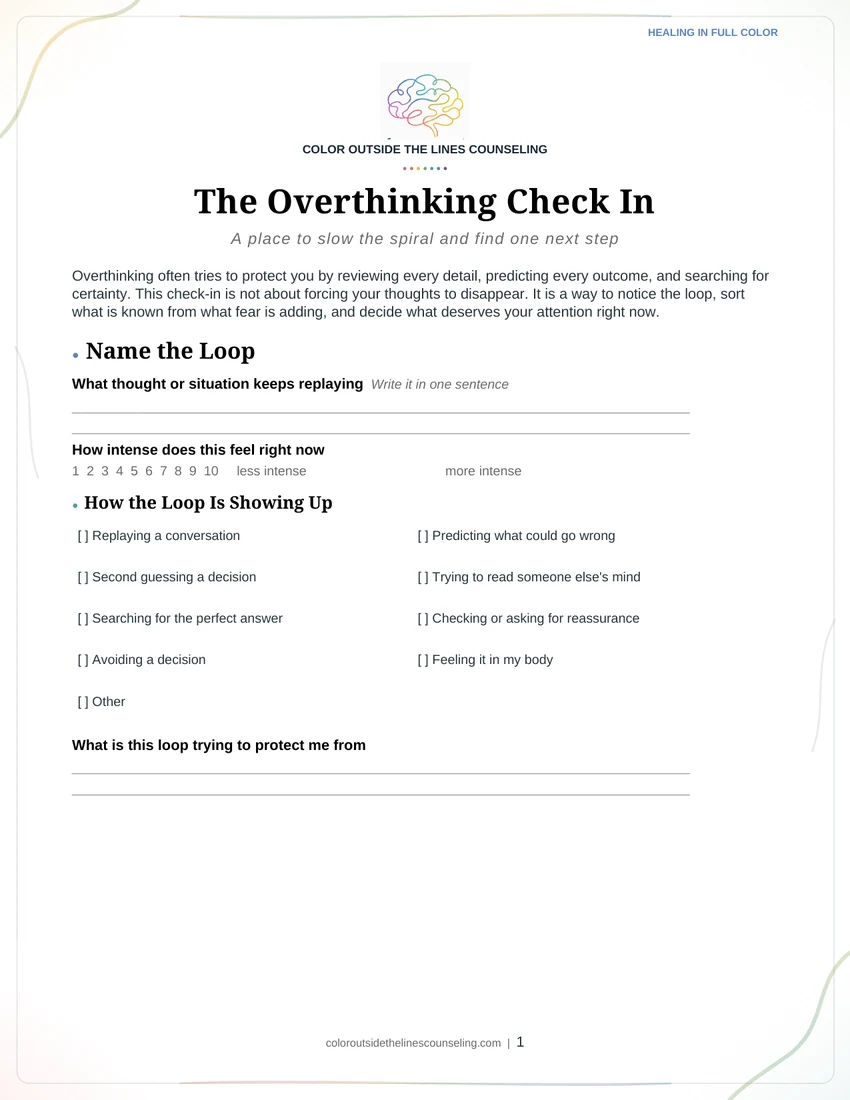
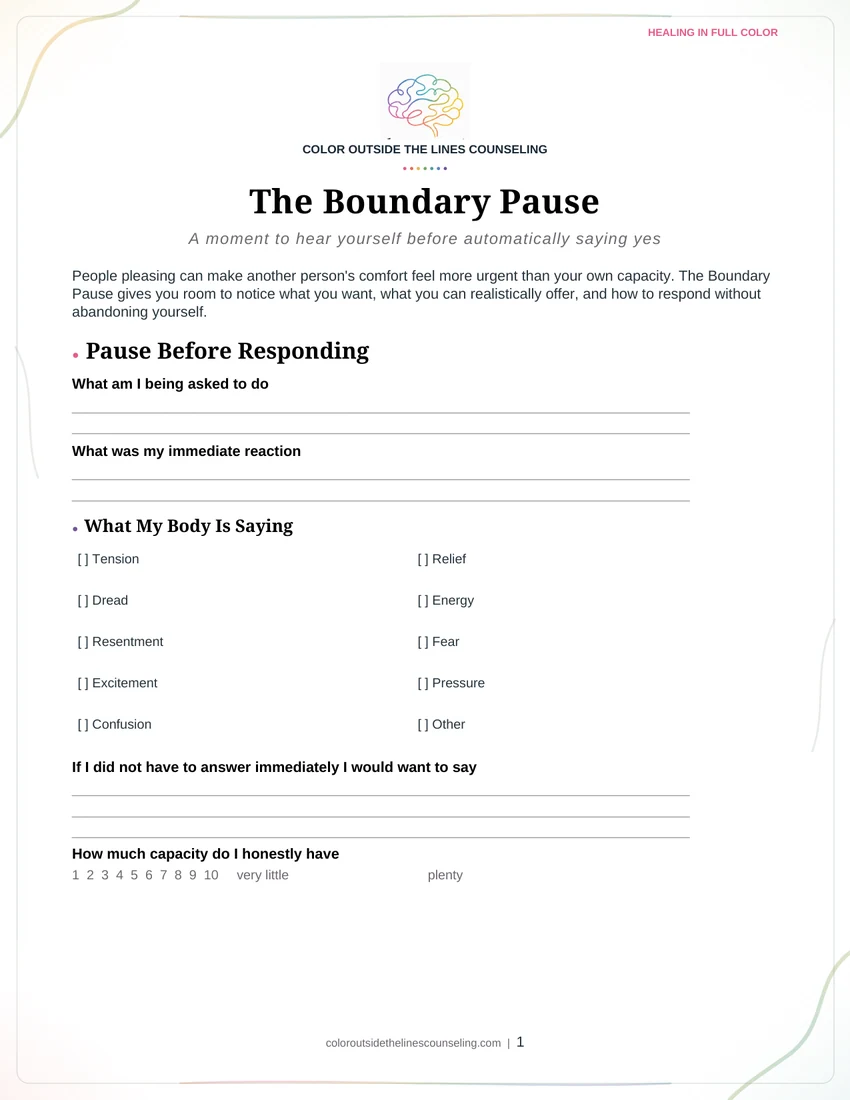
These free resources are intended for personal reflection and educational use. They do not provide a diagnosis or replace therapy, medical care, or crisis support. If you are experiencing an immediate emergency, call 911 or go to the nearest emergency department. You may also call or text 988 for crisis support.